The examples
examples/glitter_uikit/ holds sixteen runnable namespaces, and every one has a deps.edn alias and a bb task. They come in two kinds:
- Eight interactive demos you open and click — the galleries below.
- Eight live-AppKit smokes, each a small, complete glitter program that mounts a real window, asserts against real AppKit state, and exits non-zero on failure.
Run any of them with bb <name>, or jolt -M:<name> without babashka. bb info prints the whole list grouped, and bb smokes runs all eight smokes in sequence, stopping at the first failure.
All fourteen need a GUI session — and GTK4 installed, even though this renderer never calls a GTK function. See Limitations for why.
Interactive demos
| preview | bb name | Task | What it demonstrates |
|---|---|---|---|
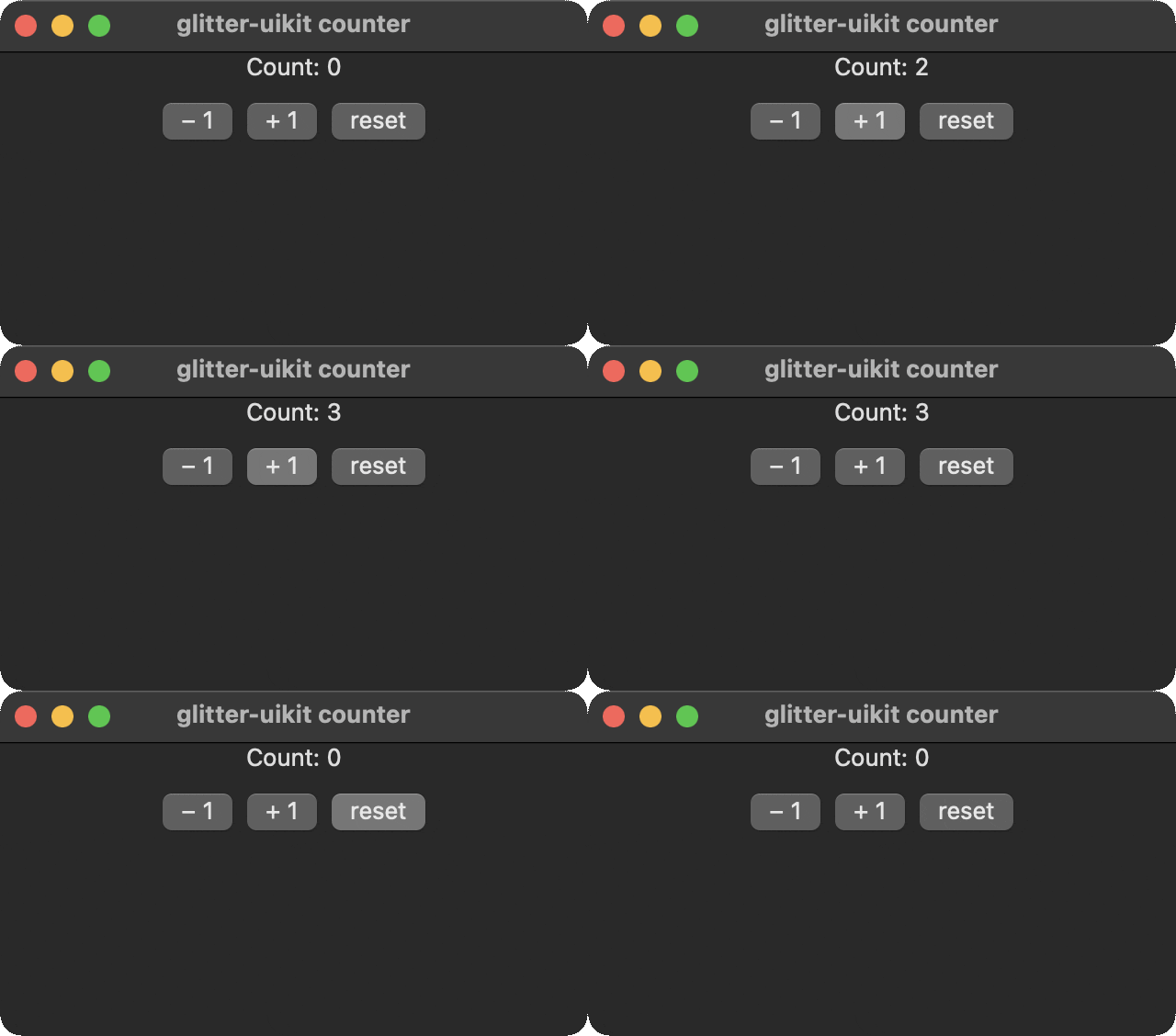 | counter | Counter | The canonical demo. One state atom, a pure state -> hiccup view, handlers as data. The whole model in a window you can click through in ten seconds. |
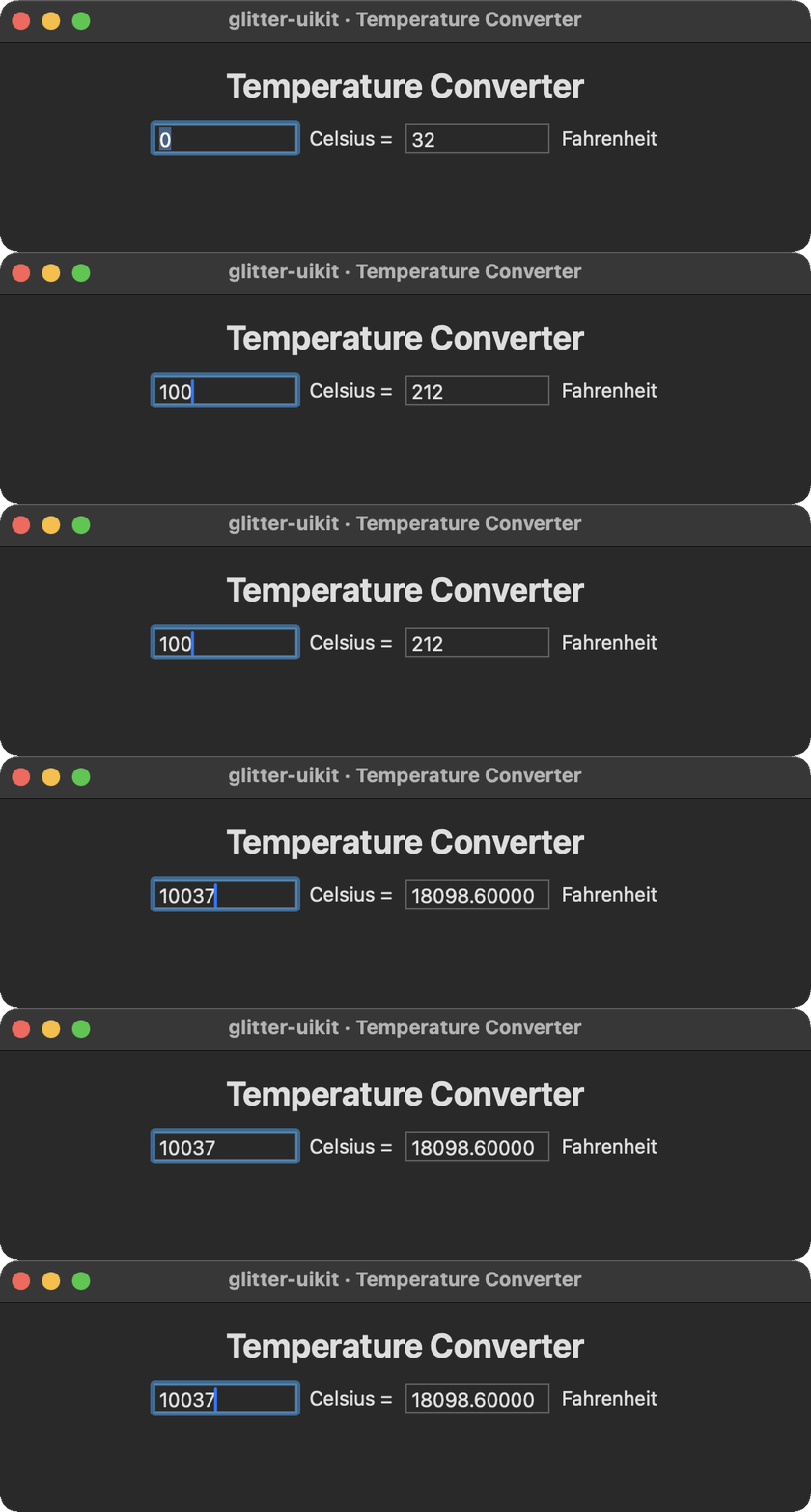 | temperature | Temperature Converter | Two linked numeric fields, each edit updating the other. Its domain half is glitter's, carried across unchanged — the pure part of a glitter app is renderer-agnostic, which is the point of the split. |
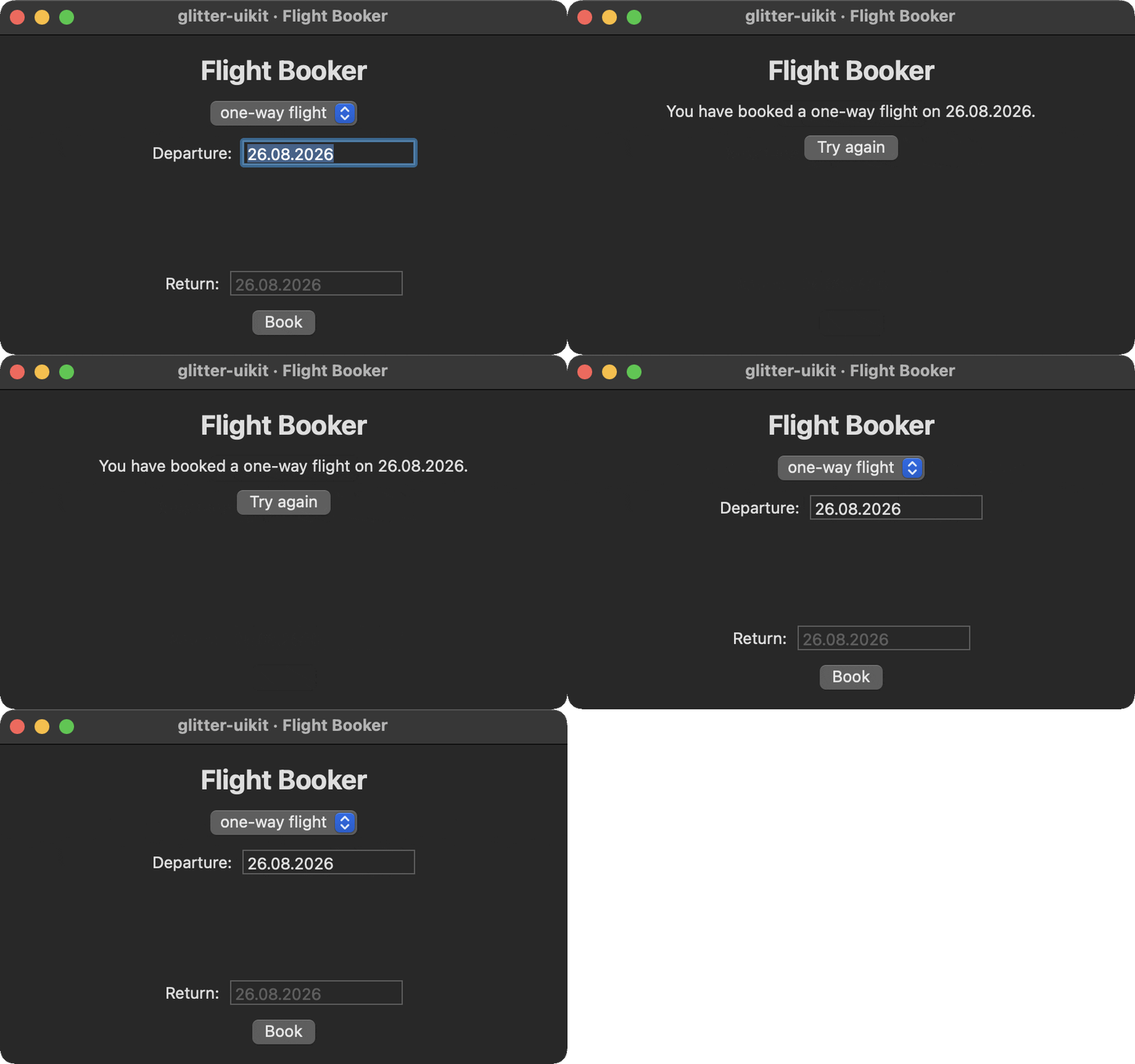 | flights | Flight Booker | Constraints between widgets and within one: a :drop-down choosing one-way/return, two strictly-validated date fields, and a Book button gated on both. |
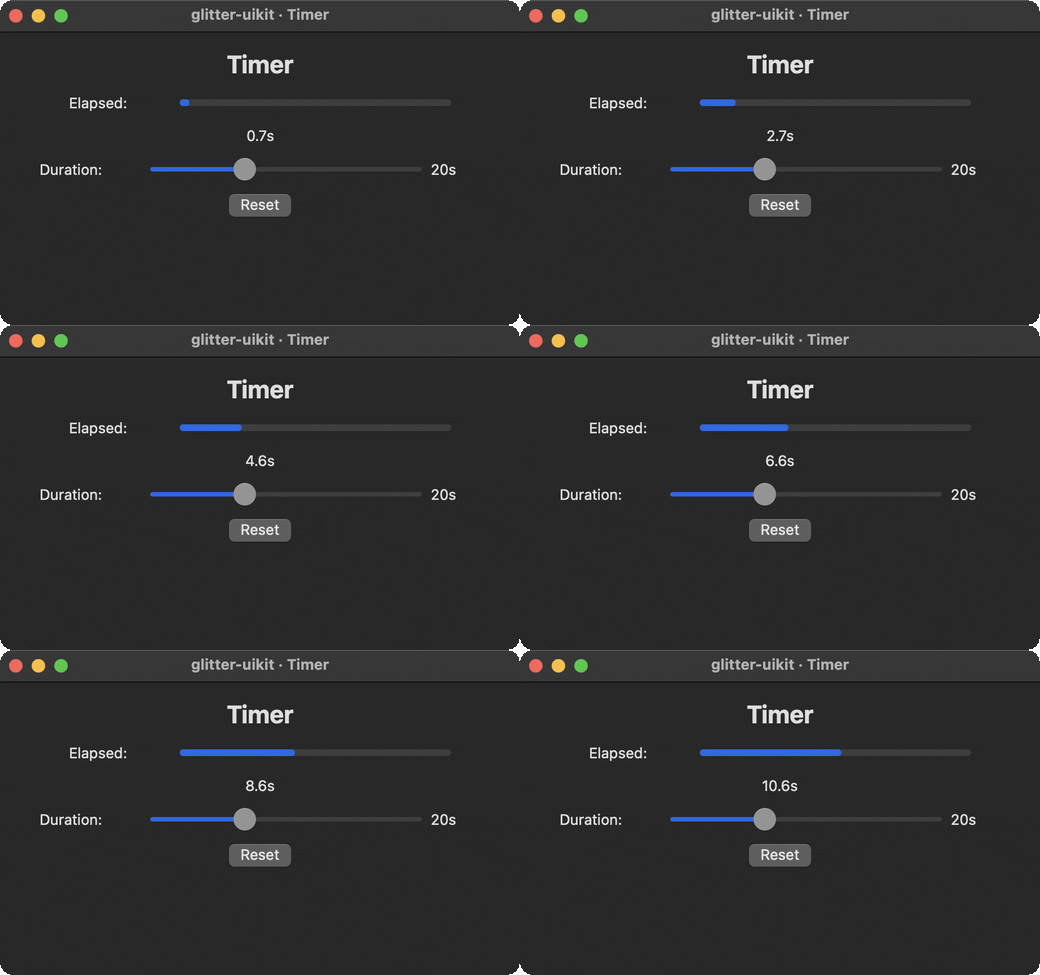 | timer | Timer | The only demo whose state advances on its own — a repeating NSTimer drives a :progress-bar, and moving the :scale changes the duration immediately rather than at the next tick. |
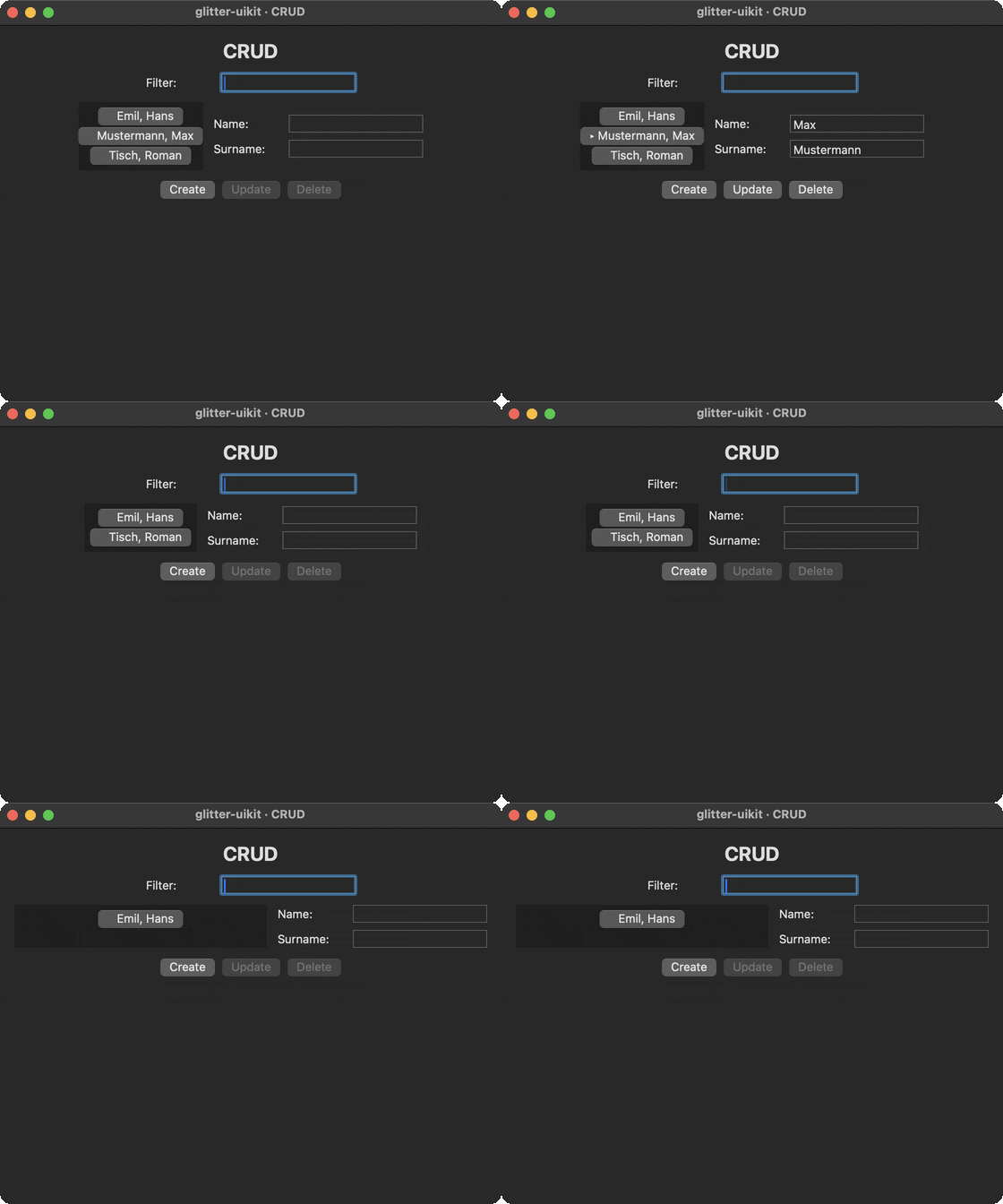 | crud | CRUD | A prefix filter, a selectable list, and Create/Update/Delete gated on selection. The spec's "separation of domain and presentation logic" is get-people — one pure filter-and-sort fn. The list is built from :scrolled + :button rows rather than a table widget; see below. |
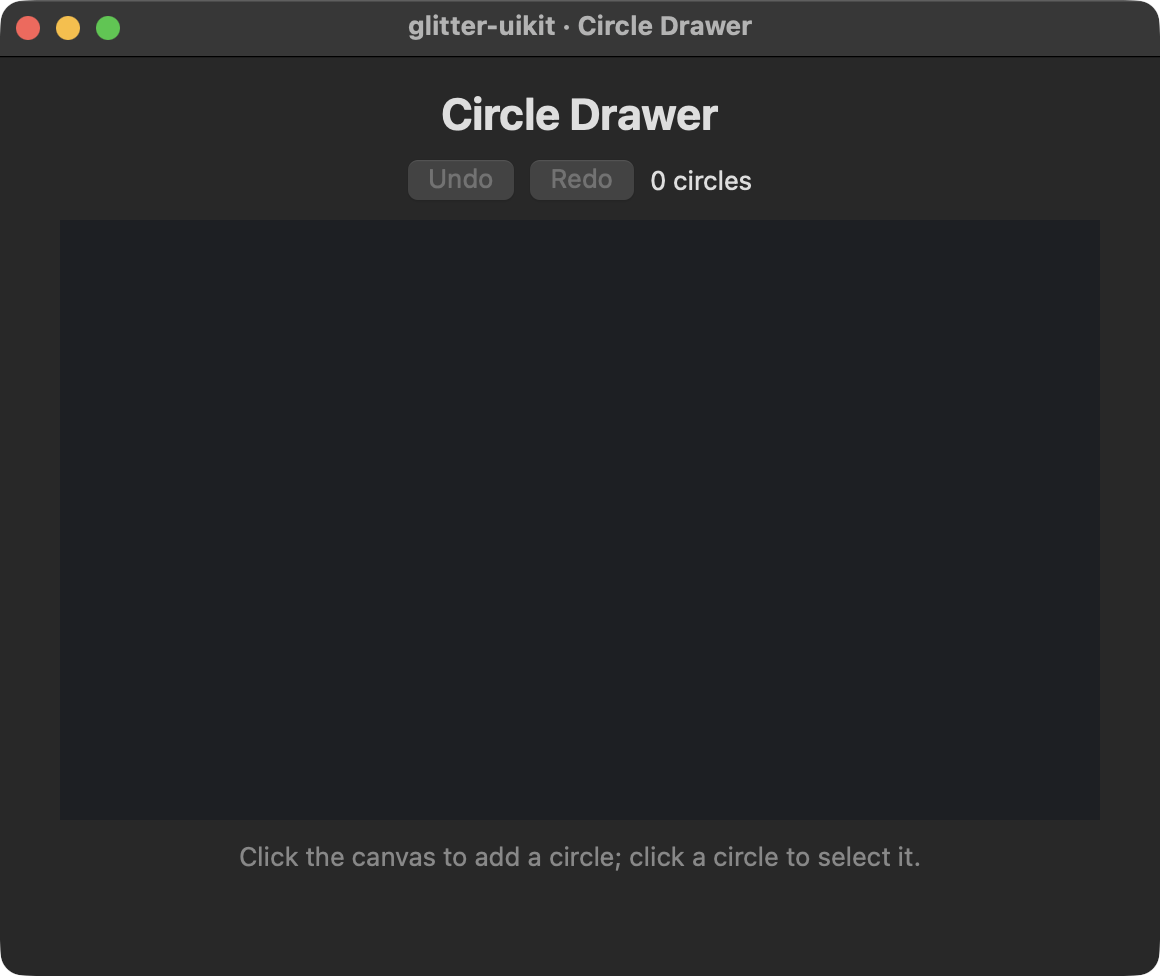 | circles | Circle Drawer | Click to place a circle, click one to select it, adjust its diameter live, undo and redo. Circles are CALayers, not views — a layer takes no part in hit-testing, so a click reaches the canvas even under a circle and hit-testing stays a pure function over the model. |
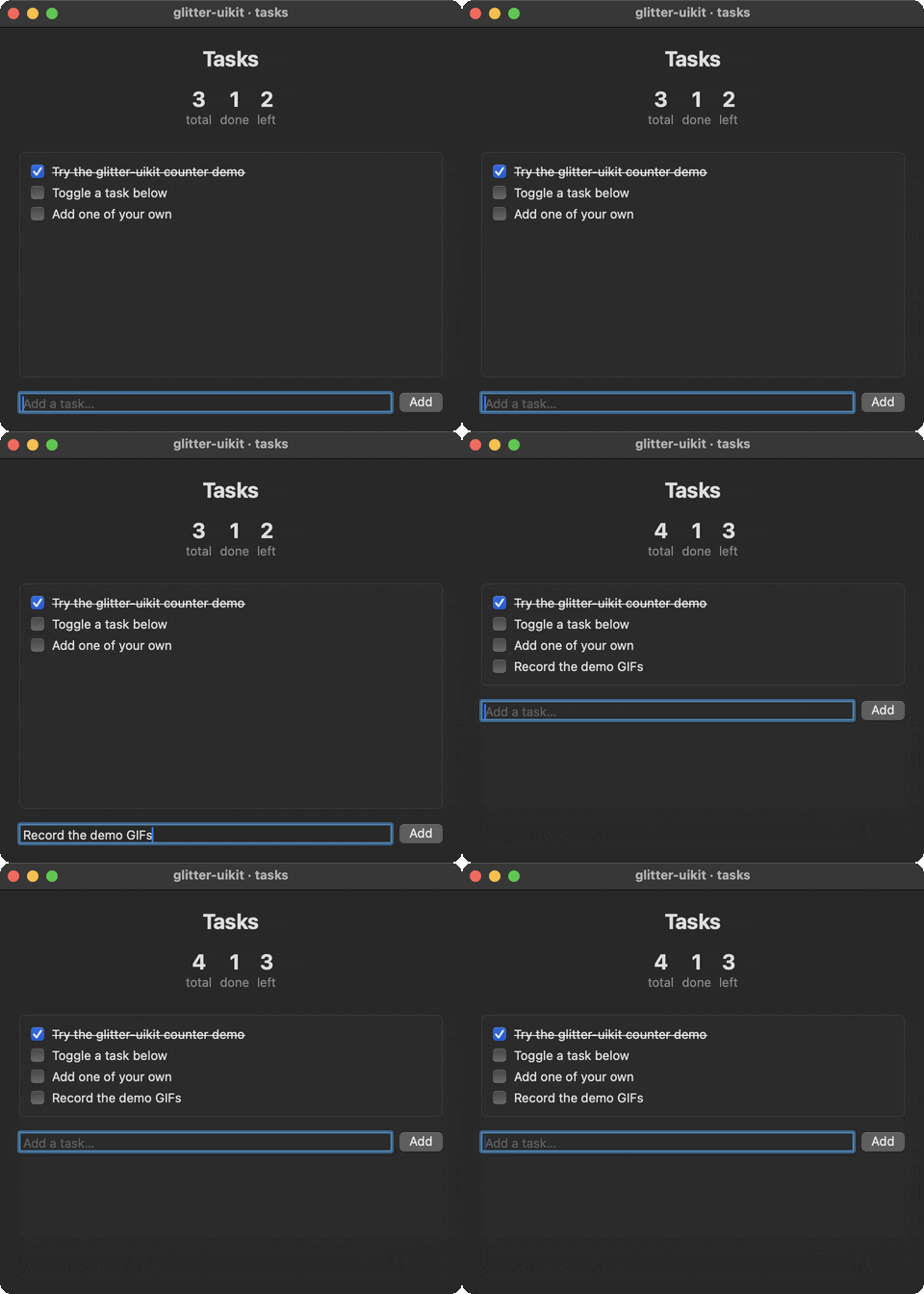 | todo | — | A task board on glitter.nexus: derived counts computed inline on every re-render (glitter has no reactive-derivation primitive), an entry with :change/:activate, checkbutton toggles, list rendering in a frame. |
7GUIs tasks 1 through 5 ship. Task 5 arrived without NSTableView: a list box is functionally a scrollable column of selectable rows, so crud builds one from :scrolled + a :button per person, with the selected row marked by a caret in its label. Every rule the spec states is satisfied; what is missing is presentation — real selection highlighting, keyboard navigation, alternating row colours — which a table widget would give for free. When :list-box lands, that view swaps its list section and nothing else.
Task 6 needed two things this renderer did not have, and both are now in it. Mouse coordinates: +[NSEvent mouseLocation] returns a CGPoint, a struct, which no scalar message-send can carry — Jolt's FFI does support aggregate returns, so ffi.clj gained struct-by-value sends and a screen→window→view conversion. And free positioning: NSStackView places children in order, so the :canvas tag is an NSButton (it must receive clicks) whose layer holds the circles.
Cells (task 7) remains out of reach: a 100×26 spreadsheet with a formula language, change propagation and cycle detection. 2,600 live cells is where NSTableView stops being avoidable.
glitter itself ships tasks 1-5 and no further, so circles had no reference to port — its model and its rendering are both original here.
The widget gallery
| preview | gallery |
|---|---|
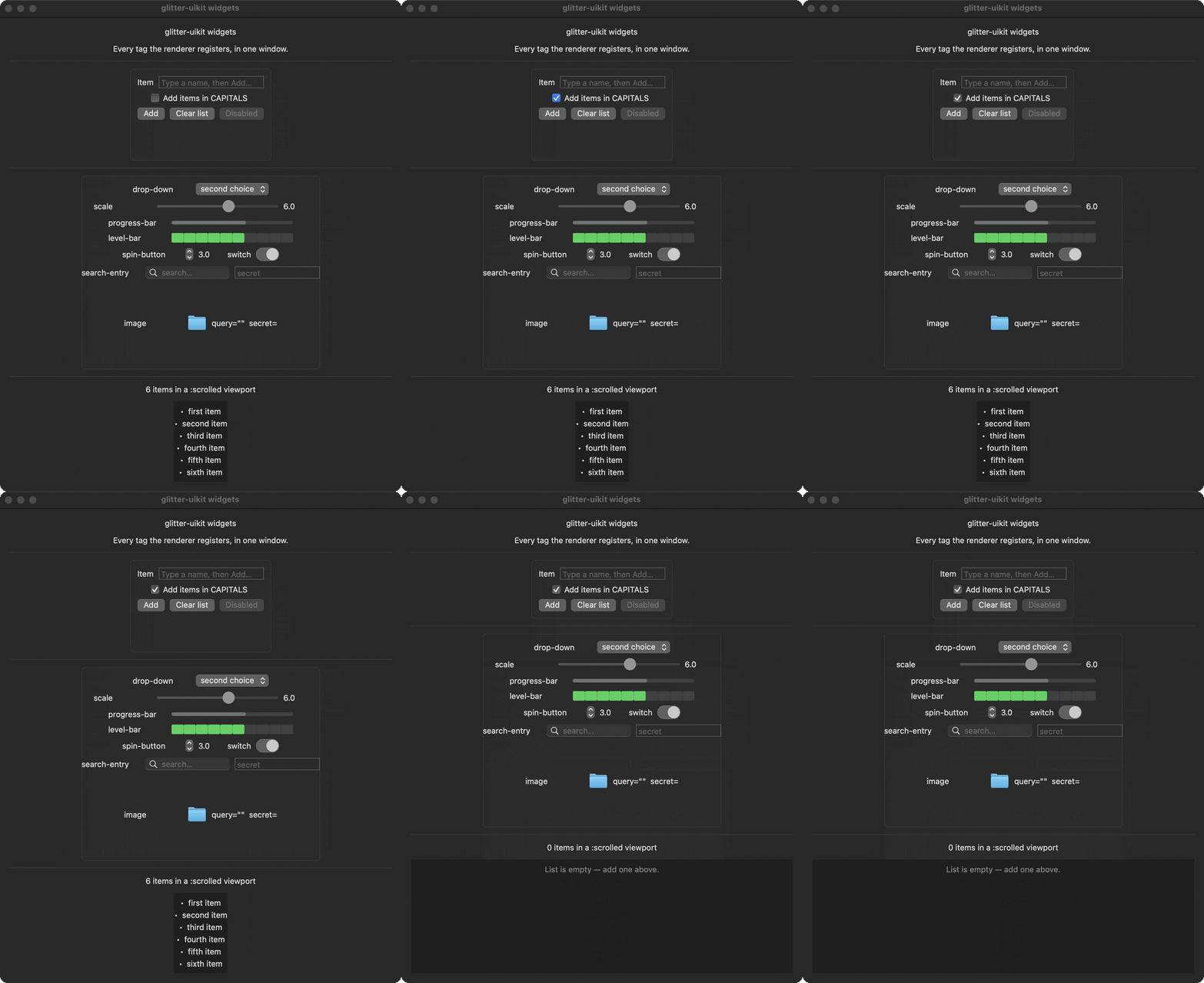 | bb widgets — every tag the renderer registers, in one window. One state key, :level, is read by three widgets at once: a :scale drives it while a :progress-bar and a :level-bar display it, so dragging the slider shows a single key re-rendering everything that reads it. It is also the only example that exercises :separator and :scrolled. |
Why the demos are worth reading, not just running
counter.clj says it directly in its own docstring: in glimmer-uikit (the Reagent-style sibling this project was ported from), local state lives in a component-scoped ratom and a click closure calls swap! itself. Here all state is in one top-level atom, the view is a pure function of it, and click handlers are data dispatched through one global fn, never closures.
todo.clj makes the same contrast at larger scale, and adds the derived-counts point: there is no memoized selector, no reaction, no cache — the three numbers above the task list are just arithmetic over :tasks re-run on every render, because re-running the whole view is the model.
The three 7GUIs ports make a different point. Their domain halves — set-temperature, parse-date / get-form-state, get-view-state — are carried over from glitter unchanged, because they are pure Clojure with no toolkit in them. Only the view and the -main differ. That is the renderer split doing exactly what it exists to do.
Findings worth knowing, from porting the 7GUIs demos
:width-chars is not a width
Nothing in this renderer could give a control a width until flights.clj needed one. :width-chars looks like the answer and is not — it routes to setPreferredMaxLayoutWidth:, a text-wrapping hint that leaves a control free to be compressed to nothing. The measured consequences were not subtle: an :entry beside a label was squeezed to zero width and vanished, and where it survived, a ten-character date rendered as 26.08.20.
Four plausible routes were each tried against a live window and each did nothing: :vexpand false on the container, :hexpand true on the field, :hexpand true on the row, and :halign :fill. What works is :width-request, which installs a real NSLayoutConstraint. The full table is in Limitations.
Lenient date parsing
flights.clj does not call t/parse-date directly. glitter verified that it is lenient under this Jolt port: "27.03.2014x" parses to 2014-03-27 ignoring the trailing garbage, "not-a-date" parses to -0001-11-30, and "31.02.2014" — not a real date — rolls over to 2014-03-03. The round-trip wrapper (parse, reformat with the same formatter, reject unless it matches the trimmed input exactly) is what actually makes the spec's "coloured red when ill-formatted" rule work. All four traps are re-verified here.
Live-AppKit smokes
These are examples in exactly the sense the demos are — each mounts a window and drives a real glitter view. What makes them smokes is that they then assert, against the live AppKit tree rather than against the renderer's own bookkeeping, which would agree with itself and pass even if no AppKit call ever landed.
bb smokes runs all eight in sequence and stops at the first failure. The full argument for each — the exact assertions, and why each is shaped to fail loudly instead of passing vacuously — is in Testing and tasks. The tables below are the index; that page is the argument.
Smokes: reconciler behaviour
bb name | Pins |
|---|---|
smoke | A view function renders into a real NSWindow, and a state-atom write re-renders it. Start here. |
keyed-smoke | A keyed reorder lands in the right live order and reuses the same view pointers rather than recreating them. Also pins the no-suppression property this renderer is built on. |
replace-child-smoke | A replaced child stays at its exact index, not appended at the end — the glimmer-uikit original's bug. |
insert-before-smoke | A new child lands mid-list; an existing child's keyed reorder moves rather than duplicates; a forward move lands at the sibling's un-incremented index — this port's own final-review fix. |
Smokes: events and value delivery
bb name | Pins |
|---|---|
reactivity-smoke | A programmatic state write re-renders in place, and a real -[NSControl performClick:] dispatches through the target/action path the renderer actually wired — not a direct handler call, which would prove nothing about the wiring. |
handler-cleanup-smoke | Unmounting a subtree drops every handler registration it held, grandchildren included. AppKit reuses freed addresses, so a leaked registration can be inherited by a newly allocated view at the same address. |
Smokes: threading
bb name | Pins |
|---|---|
main-thread-smoke | A state change made from a non-main thread still renders on the AppKit main thread — the property the CFRunLoopSource scheduler exists for. |
repl-live-smoke | The same marshalling, shaped like a live nREPL session: a worker thread mutates state while the app runs. An unmarshalled render touching AppKit off-main aborts the process outright, so surviving is itself part of the assertion. |
How the recordings are made
The capture tooling is maintainer-only. Everything below describes how the images in this repo were made, and both tools it names —
screen-grabandcgevent— are not public yet. You do not need either of them: every screenshot and GIF is committed, so the gallery works from a plain clone. This section is here so the provenance of each image is on the record, and so the recipe is written down for whoever regenerates them.
Every preview above is a real recording of the demo being driven. They are produced by scripts/record_gifs.sh, which drives each demo through cgevent's accessibility API: :tap-by-role sends AXPress to a real control, and once a field is focused that way a synthetic :type lands in it. That is a different mechanism from glitter's, which steers GTK with a raw Tab/Space/type timeline — screen-grab's own README notes that a synthetic click "cannot actuate in-window controls in any app", which is why the accessibility route is the one that works here.
The flows live in scripts/flows/*.edn, one per demo, and are worth reading before writing another. :role/:text/:id are the only selector shorthand keys cgevent honours, so {:role "AXButton" :title "Add"} matches any button and passes vacuously. An ambiguous match is an error, which is why flights.edn taps only uniquely-named controls — both its date fields hold today's date at startup.
Recording one needs a click first
scripts/record_gifs.sh is not unattended. From a cold launch the app exposes only a recursive AXApplication with no AXWindow child, so a flow finds nothing to press; the subtree populates once a person clicks the window. Activating through System Events, clicking the title bar synthetically, and polling for four minutes all failed to wake it. The script waits — printing the window's on-screen position — until you click, then records by itself.
timer is the exception that needs no click, because its flow contains no taps: the demo advances on its own.
Whether an AppKit app launched bare by Jolt — no .app bundle, no bundle identifier — should expose its window to accessibility before it is focused is an open question, and the likeliest place a fix would come from.
The stills under docs/demos/*.png are kept alongside the GIFs and regenerate unattended via screen-grab shot --manifest scripts/demo_manifest.edn, needing no clicking at all. That is the CI-safe path if these ever have to be rebuilt without a person present.
One further caveat if you touch counter: its committed screenshot shows Count: 5 because a person clicked the button five times. That frame cannot be regenerated by the tool. The ledger hashes each item's :src, so an unchanged counter.clj reports up to date and the frame is safe — but editing counter.clj, or passing --force, recaptures it as an initial-state Count: 0. Re-steer it by hand rather than committing that.
Adding an example
Two touchpoints, and skipping either leaves the example invisible to something:
- The namespace under
examples/glitter_uikit/, plus adeps.ednalias sojolt -M:<name>works without babashka. - A
bb.edntask, sobb <name>works and it shows up inbb info.
Then add its row here — to the demo gallery, or to the smoke index above. A new smoke also belongs in bb smokes and in Testing and tasks, which is where its assertions get explained.
If the new example is a screenshot-worthy interactive demo, add it to scripts/demo_manifest.edn's :examples and regenerate with screen-grab shot --manifest scripts/demo_manifest.edn. If it animates on its own, without needing input, it can go in scripts/demo_gifs.edn instead and be recorded with screen-grab record.
Both of those need the maintainer-only tooling above. A contribution that adds an example is entirely welcome without an image — say so in the PR and it can be captured on this side.